
Myaamia Center staff to be featured on ‘First America’ podcast
Podcast tells part of the story of America's 250th anniversary from different perspectives
Myaamia Center staff to be featured on ‘First America’ podcast
Podcast tells part of the story of America's 250th anniversary from different perspectives
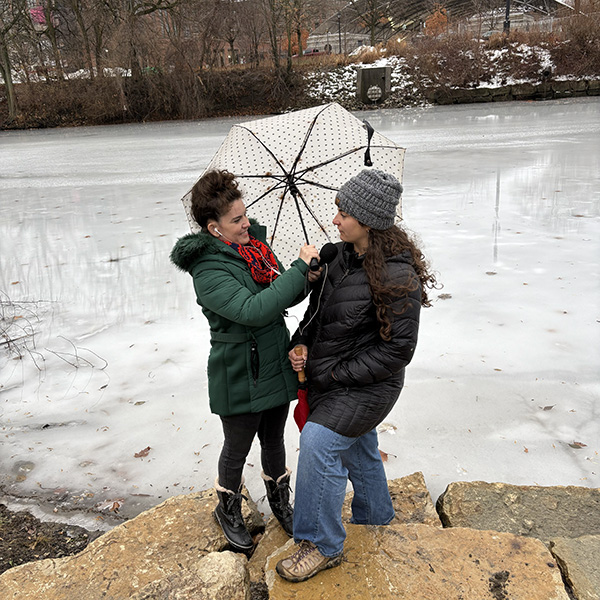
She and Ironstrack also spent a lot of time talking about “what that means for Myaamia people and what that means for the language and cultural revitalization that is happening today,” she said.
Shriver, also was interviewed on the podcast, is an adjunct assistant professor of History and research associate with the Myaamia Center.
The Myaamia Center continues groundbreaking work in language and cultural revitalization that has led to the first generation in about 100 years learning to speak the Myaamia language and reconnecting with their cultural heritage.
When asked about what was going on with the Myaamia people and this region 250 years ago, Ironstrack referred to a blog post on the Mihši-maalhsa Wars - Part 1 that he published in 2014.
“The short answer is that squatters were flooding into what is today Kentucky at the end of the Revolution and this sparked a conflict over control of the Ohio River Valley,” he said. “At the end of the American Revolutionary War, the Treaty of Paris ceded British control of what is today the eastern U.S. to the new nation, but tribal nations in the Ohio Valley had signed no land treaties with the British, so this cession was fraudulent from a Native perspective.”
Ironstrack said it’s important to remember that the state of Ohio didn’t exist in 1776.
“This land would remain Indian Country for a couple of decades after the signing of the Declaration of Independence. Specifically for Miami University, this land would only be officially ceded to the U.S. in 1795 at the Treaty of Greenville,” Ironstrack said.
Established in 1809, Miami University is located in Oxford, Ohio, with regional campuses in Hamilton and Middletown, a learning center in West Chester, and a European study center in Luxembourg. Interested in learning more about the Myaamia Center? Visit the website for more information.